Key takeaways
- A leadership team's biggest problems are usually not strategic; they are the three or four conversations no one is having. The Enneagram gives the team a respectful language to have them.
- Run it as a facilitated day, not a report handed out — the value is in the type map, the intent-vs-impact round, and what the CEO models in the room.
- The type map shows a team its dominant culture (what it over-does), its missing perspectives (what it never sees), and its predictable clashes (which two people will always collide, and why).
- It unlocks four conversations — the Eight–Nine dynamic, the Three's pace, the silence around the boss, and the missing dissent — that trust-building exercises rarely reach.
- The three mistakes: using it to label people, letting the CEO opt out, and doing it once. Done well, it becomes part of how the team runs, not a workshop they remember.
The Enneagram works with a leadership team by mapping the nine core motivations across the people in the room, which makes the team's friction visible as a pattern rather than a set of personal grievances — and then, in a facilitated session, gives everyone a respectful language to say the things that hierarchy and harmony normally keep unsaid. That is the whole method. What follows is how to do it well, what it unlocks, and how to avoid turning it into the corporate equivalent of a horoscope.
We have run this with leadership teams from multinationals and family businesses across Malaysia, Singapore and Greater China, in English and in Mandarin. The pattern is remarkably consistent. The team does not have a strategy problem. It has a conversation problem — three or four things that everyone knows and no one says — and the strategy problem is downstream of it.
What the Enneagram fixes that team-building does not
Team-building creates goodwill; the Enneagram creates understanding, and only understanding survives the next hard quarter. Patrick Lencioni's model of team dysfunction puts the absence of trust at the base of everything else — fear of conflict, lack of commitment, avoidance of accountability, inattention to results — and defines the trust that matters as vulnerability-based: the willingness to say "I was wrong", "I need help", "this is what I'm bad at". Most trust-building exercises try to produce that vulnerability directly, in a room full of senior people who have spent their careers learning not to show it.
The Enneagram takes a side door. Instead of asking a Type 8 CEO to be vulnerable, it asks them to recognise a description of the Eight — the directness, the protectiveness, the way intensity becomes intimidation — and to say out loud "yes, that's me". That is vulnerability with a structure around it. It is much easier to admit to a pattern that has a name and that countless other leaders share than to admit to a personal failing. And once the CEO has done it, everyone else can.
"Seek first to understand, then to be understood."
Stephen R. CoveyThe type map: what a team sees about itself
The central exercise is simple: each person's type is placed on the nine-point map, and the team looks at the shape. Three things become visible within minutes.
The dominant culture
A team heavy in Threes and Eights moves fast, decides hard, and burns people. A team heavy in Nines and Sixes is careful, loyal and slow to commit. A team of Ones and Fives is rigorous and quietly critical. None of these is wrong, but each has a signature over-use — and the team is usually already suffering from it without knowing why. The map names it.
The missing perspective
Just as telling is where the map is empty. A leadership team with no head-centre types (5, 6, 7) tends to under-plan and over-commit. A team with no heart-centre types (2, 3, 4) can be blind to how its decisions land on people. A team with no gut-centre types (8, 9, 1) may struggle to act. The empty space explains the recurring surprise: the risk nobody saw, the resignation nobody expected, the decision that was made three times and executed none.
The predictable clashes
Every leadership team has two people who always collide, and everyone else has quietly filed it under "personality". The map shows it is structural. The Eight and the Nine clash because one demands a position and the other needs time to find theirs. The One and the Seven clash over standards versus speed. The Three and the Five clash over pace versus rigour. When the clash has a structural explanation, the two people stop taking it personally — and the rest of the team stops managing around it.
The four conversations it unlocks
In our experience, a well-run session reliably opens four conversations that leadership teams otherwise avoid for years.
- The silence around the boss. When the CEO's type is on the map — and the CEO has owned it — the team can finally say what it is like to work for them. "The Eight in you means we've stopped bringing you bad news" is hearable in a way that "you're intimidating" never was. This single conversation is, in Asian business cultures especially, worth the whole day.
- The Three's pace. Results-driven leaders rarely hear that the treadmill has a cost until someone senior resigns. The map lets the team say it before that, and lets the Three hear it as a pattern rather than an attack.
- The decision that never gets made. Teams led or heavily populated by Nines have a specific dysfunction: everything is discussed, everyone is heard, nothing is decided. Naming it — with affection — changes how the team runs its meetings the following week.
- The missing dissent. If the map shows no Sixes or Fives, the team learns it has no built-in sceptic, and can deliberately appoint one for major decisions. This is where the Enneagram stops being about people and starts being about process.
How to run it: a practical shape
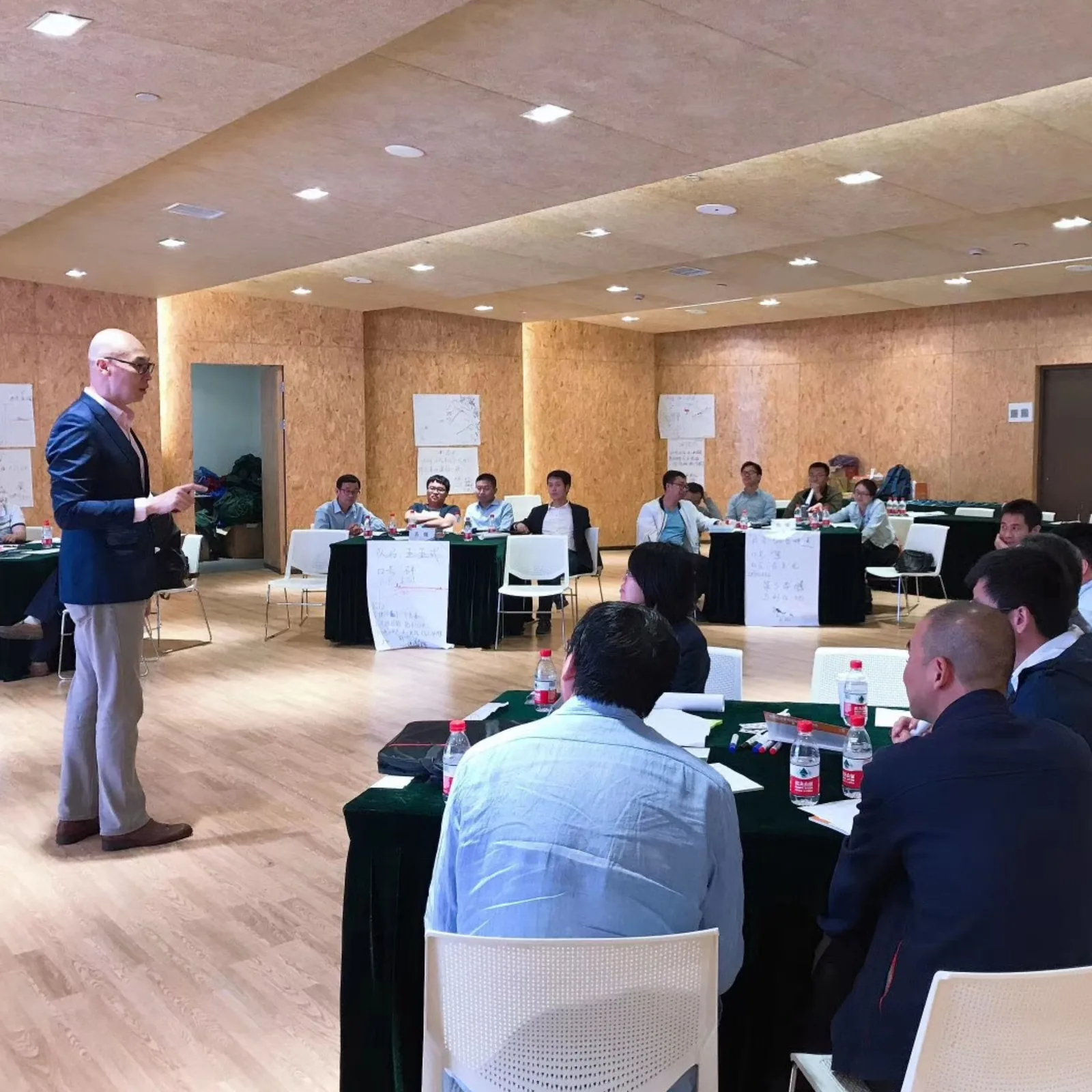
A first session needs a full day; two days let the team move from understanding to redesign. The shape we use, adapted to each team, is below. What matters most is not the agenda but two conditions: a skilled facilitator who knows the Enneagram deeply, and a CEO willing to go first.
- Before the day: individual typing. Each leader takes an assessment — the free FutureX Business Enneagram Test is designed for this — and has a short private conversation with the facilitator to confirm their type. Nobody arrives on the day unsure, and nobody is typed in public.
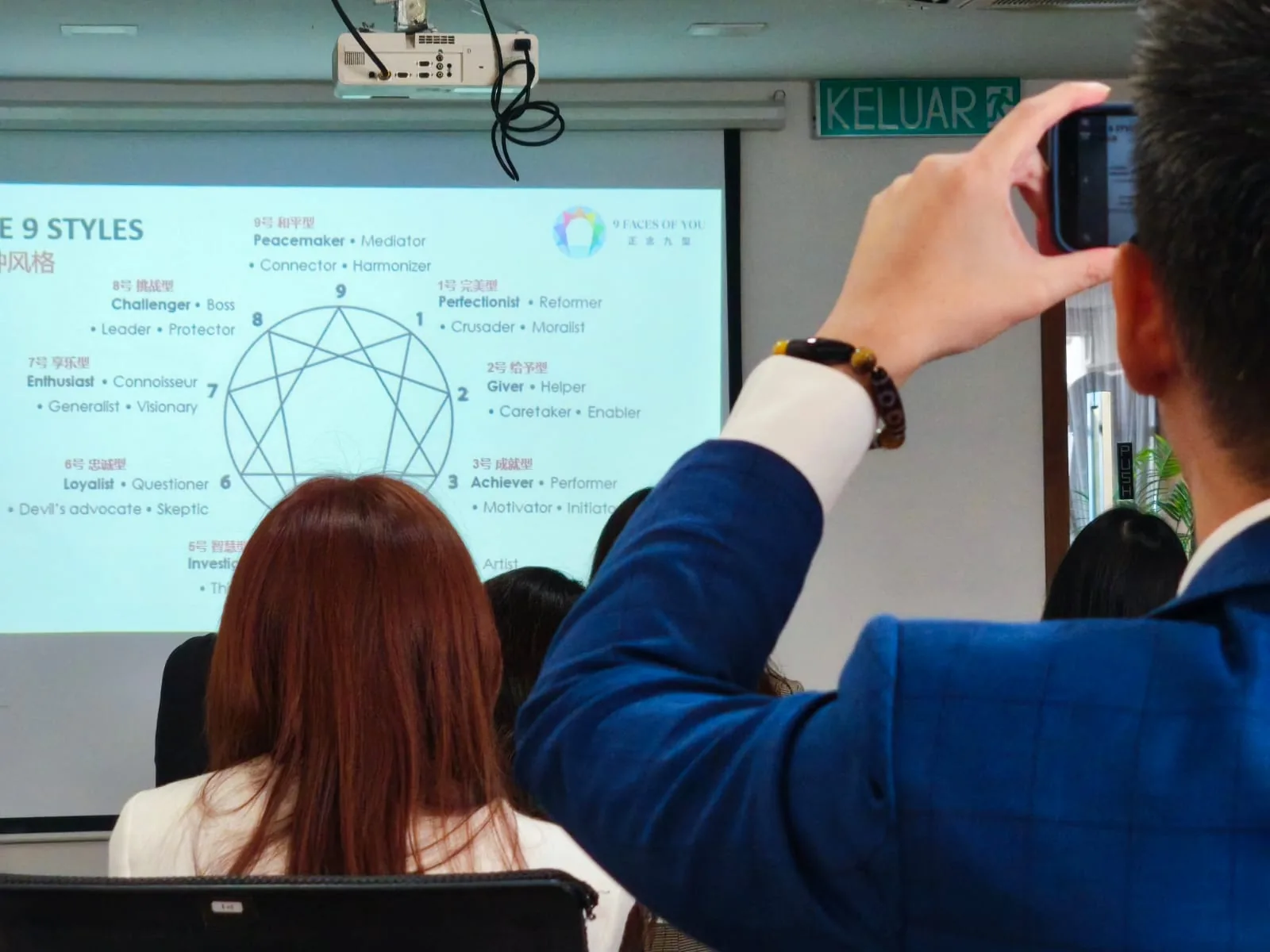
- Morning: the nine types, through a leadership lens. The team learns all nine — not just their own — with the emphasis on strength, blind spot and behaviour under stress. This builds the shared vocabulary everything else depends on. See the nine types as leaders for the content.
- Midday: the type map. Types go on the map, voluntarily, CEO first. The team reads the shape: dominant culture, missing perspective, predictable clashes.
- Afternoon: intent versus impact. Each leader states the intent behind their type's characteristic behaviour; colleagues describe the impact. This is the conversation the whole day is built to make possible, and it is where the trust Lencioni describes actually gets built.
- Close: three agreements. The team leaves with three specific changes to how it decides, disagrees or gives feedback — not a list of resolutions, three agreements with names attached. On a two-day programme, day two is spent designing and rehearsing these.
The three mistakes that turn it into a party trick
The Enneagram is powerful enough to do harm when it is used badly, and it is used badly in three predictable ways.
- Labelling. "Of course she said that, she's a Four." The moment type becomes a way to dismiss someone, the tool has been inverted. Good facilitation sets the rule early: you may name your own pattern; you may not diagnose someone else's.
- The CEO opts out. A leadership team session where the boss observes, or attends only the morning, or declines to share a type, teaches the team one thing: this is for you, not for me. The CEO going first is not a nice-to-have. It is the mechanism.
- Doing it once. A single memorable day fades in a quarter. The teams that change are the ones that keep the language alive — a two-minute "which type is running this meeting?" check-in, type-aware feedback conversations, the map revisited when someone joins or leaves. The Enneagram becomes part of how the team runs, not a workshop it remembers.
Why it lands in Asian leadership teams
Leadership teams in Malaysia, Singapore and China often carry a particular weight: respect for hierarchy, a preference for harmony, and a deep reluctance to cause anyone to lose face. These are strengths — and they are exactly the conditions under which the most important feedback goes unsaid. The Enneagram is unusually well-suited to this context because it makes truth sayable without confrontation. A pattern with a name and a number can be discussed the way a market condition is discussed: as something real, shared and workable, rather than as a personal accusation. We have watched a Mandarin-speaking family-business leadership team say more to each other in one afternoon than in the previous decade, and not one person lost face doing it.
Bringing it into your organisation
If your leadership team has the same three arguments every quarter, or the same silence, the Enneagram is the fastest route we know to the conversation underneath. FutureX delivers the Business Enneagram Leadership programme in-house for intact leadership teams — a day or two, English or Mandarin, six to twelve people — and, for Malaysian companies, it is HRD Corp claimable under SBL-Khas with nothing paid upfront (here is how the claim works). Leaders who want to go deeper individually join a public cohort or work with us one-to-one.
Most leadership programmes change behaviour. This changes the leaders — and then the team changes itself. Email simyee@futurexleader.com to talk about your team, or start where every team session starts: with each leader finding their own type.
Frequently asked questions
What does the Enneagram do for a leadership team that DISC or team-building does not?
It reaches motivation rather than behaviour. Team-building builds goodwill; DISC gives a communication vocabulary; the Enneagram explains why two capable people clash every time, why a decision never gets made, and why the team goes quiet around the CEO — and gives everyone a face-saving way to name it.
How long does an Enneagram team session take?
A meaningful first session is a full day; two days allow the team to move from understanding types to redesigning how they decide, disagree and give feedback. A half-day 'introduction' is usually enough to make people curious and not enough to change anything.
Do team members have to share their Enneagram type?
Sharing should be voluntary but is almost always chosen once trust is set up properly — and the CEO going first matters more than anything else. Nobody is required to disclose a result, and the facilitator should never reveal one on someone's behalf.
Can the Enneagram be used to select or restructure a team?
No. The Enneagram describes motivation, not capability; every type can succeed in every role. Using it to hire, fire or reassign people is misuse, and it destroys the psychological safety the tool depends on. Use it for development and team dynamics only.
What size of team works best?
Six to twelve is ideal — large enough to see patterns and clashes, small enough for everyone to speak. Very large groups should be split into intact teams rather than run as one session.
Is an Enneagram team workshop HRD Corp claimable in Malaysia?
Yes. FutureX Leader's Business Enneagram Leadership programme is HRD Corp registered (Programme No. 10001712614) and can be delivered in-house for a leadership team under SBL-Khas, with nothing paid upfront by the company.