Key takeaways
- Malaysian teams rarely argue with a new boss; they go quiet, then they leave. The first sign of a problem is silence, not conflict, so a GM from headquarters has to go looking for it.
- The collisions are predictable: speed of decision, how feedback is given, what "urgent" means, and how much the team expects to be consulted. Name them in the first month and they become manageable.
- The first ninety days decide retention. A simple plan for the GM and the local leaders, built around how each person actually works, keeps more people than a pay rise does.
- Leadership training for your Malaysian staff can be delivered in Mandarin and is HRD Corp claimable if your Malaysian entity is registered and contributes the levy. The GM from headquarters attends; the claim covers the Malaysian employees.
本文有中文版:中资企业在马来西亚:如何组建并带好一支留得住的本地团队 →
A Chinese company builds a stable Malaysian team by doing three things in the first year that headquarters rarely plans for: choosing local leaders for fit with the GM rather than for their CV alone, teaching the GM how feedback and decisions actually travel in a Malaysian workplace, and running the first ninety days of every key hire deliberately. Everything else, from pay bands to KPIs, matters less than those three. This guide explains why, and how to do each one, drawing on our work with Chinese-speaking leaders who run teams in Malaysia.
Over the past few years a wave of manufacturers, electronics and semiconductor suppliers, EV and solar companies, logistics operators and consumer brands from China, Taiwan and Hong Kong has set up in Johor, Penang, Kulim and the Klang Valley. The plants are well run. The trouble usually starts one level down from the plant: in the relationship between the general manager sent from headquarters and the Malaysian managers hired to run the floor, the sales team and the back office.
Why Malaysian teams go quiet instead of pushing back
Malaysian teams go quiet because, in most local workplaces, disagreeing with the boss in a meeting is not a career move, and the cost of silence is invisible until someone resigns. Malaysia is a high-context, hierarchy-conscious culture in the sense Erin Meyer describes in The Culture Map: messages are read between the lines, and status shapes who speaks. That sounds familiar to a manager from Shanghai or Taipei, which is exactly the trap. The surface looks similar; the rules underneath are different.
Three differences catch most Chinese GMs:
- Feedback travels sideways, not up. A Malaysian manager who disagrees will often tell a peer, or an HR colleague, before telling the boss. If you only listen upward, you hear nothing.
- "Yes" has several meanings. "Can, boss" can mean yes, can mean "I heard you", and can mean "I will find a way to tell you later that this is not possible". Tone and timing carry the real answer.
- Face is spent faster than in China. Public correction, even mild, is remembered for a long time in a Malaysian team. The person corrected will rarely show it. They will simply stop volunteering.
Peter Drucker's line applies with unusual force here: the most important thing in communication is hearing what isn't said. The GM who treats silence as agreement is managing a team that has already made its decision.
Where headquarters' expectations collide with the local team
The collisions are predictable, which is the good news; they can be named in the first month and handled. The table below is what we most often see on the two sides of the same company.
| Topic | What headquarters expects | What the Malaysian team experiences |
|---|---|---|
| Speed of decision | Decide in the meeting, execute tomorrow, adjust later | Decisions made without consultation feel imposed; execution slows while people check whether it is "really" decided |
| Feedback | Direct, in the moment, in front of the team if needed | Correction in public costs face; the reply is silence, then a resignation "for a better opportunity" |
| Working hours and "urgent" | Messages at 10 pm are normal; urgent means now | Boundaries around family, prayer times and festivals are real; "urgent" every day stops meaning anything |
| Language | Mandarin by default in management meetings | Malay and Indian managers are excluded without anyone intending it; Chinese-Malaysian staff become the only bridge and burn out |
| Loyalty | Earned over years; moving jobs is a mark against you | Moving for a 20% raise is normal; the Malaysia Talent Report 2026 found 93% of professionals open to a better opportunity |
| Authority | The GM's word carries the weight of headquarters | Respect is given to the title on day one and to the person only after they have shown they listen |
None of these is a Malaysian flaw or a Chinese flaw. They are two normal systems meeting without a translator. The job of the first quarter is to be the translator, on purpose.
Hire the local leaders for fit with the GM, not only for the CV
The local managers who stay are the ones whose way of working fits the GM's, and that fit can be checked before the offer. Interviews and references test capability. They almost never test how a specific candidate and a specific GM will decide, give and receive feedback, and handle a bad month together, which is what decides the first ninety days.
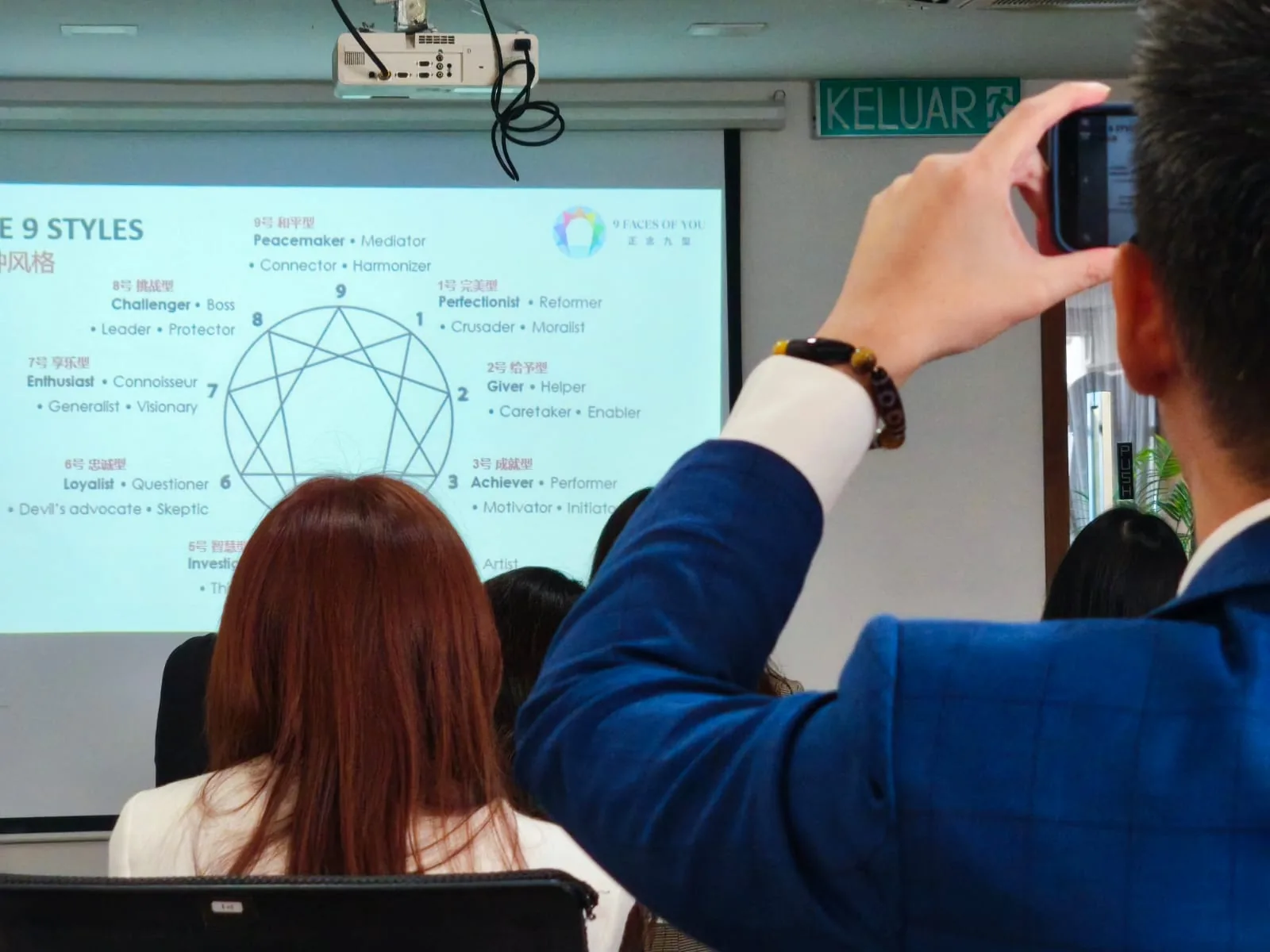
We use the Business Enneagram for this because it reads motivation rather than behaviour. A GM who leads like a Type 8 (decisive, protective, direct) hiring a plant manager who works like a Type 6 (careful, loyal, asks the hard questions) can be an excellent pair or a quiet disaster, depending entirely on whether both know the pattern. X-Map, built by our sister platform Business Enneagram Asia, shows that pairing in thirty seconds, in Mandarin or English, and the candidate's part takes eight minutes.
Before the offer, ask the GM and the finalist the same three questions separately: how do you like to receive feedback when something is wrong; what do you need before you commit to a big decision; what do you most need from the other person in the first month. Put the answers side by side. The gaps are not reasons not to hire. They are the GM's first-month to-do list.
The first ninety days of a new GM in Malaysia
A GM from headquarters settles a Malaysian team fastest by spending the first ninety days listening visibly, deciding in a way the team can see, and fixing the two or three relationships that matter most. In practice:
- Weeks 1–2: map the team before changing it. Know each key person's working pattern, not only their role. Find out who the team actually goes to with a problem; it is rarely the org chart.
- Weeks 2–4: set the rules of feedback out loud. Say how you give it and ask how each manager wants to receive it. Move correction to one-to-one, and keep praise public. This single change is the one most often credited by Malaysian managers for deciding to stay.
- Month 2: make decisions visible. If headquarters has decided, say so and say why. If the team is being consulted, say that too, and close the loop. Ambiguity about which mode you are in is what the team reads as disrespect.
- Month 2–3: fix the language default. Management meetings in English with Mandarin available, not the reverse. The Chinese-Malaysian managers who have been translating for everyone will thank you first.
- Month 3: a 90-day check on every key hire. Thirty minutes each: what has surprised you, what do you need from me, what would make you leave. Done honestly, this conversation finds the resignation six weeks before the letter.
Illustrative composite: a Taiwanese electronics supplier in Kulim lost two of its first three Malaysian section heads inside a year. Both exits were recorded as "better offer". When we mapped the GM and the remaining team, the pattern was the same in each case: fast public corrections from a GM who meant them as coaching, received by managers who needed them in private with the reasoning attached. The fix cost nothing. The GM moved corrections to one-to-one and started his Monday meeting by asking the quietest person first. The third section head is still there.
What leadership training in Mandarin should actually cover
Leadership training for a Chinese company's Malaysian team works when it is run for the mixed room, in the languages the room speaks, around the real relationships in it, rather than as a translated version of a course designed for a homogeneous team. Three formats do most of the work:
- A team read before any workshop. Every member takes the free Enneagram assessment (English or 中文, five to eight minutes). We map the working relationships pair by pair and brief the GM privately on which two or three to work on first. No slides, no theory; the team's own patterns on one page.
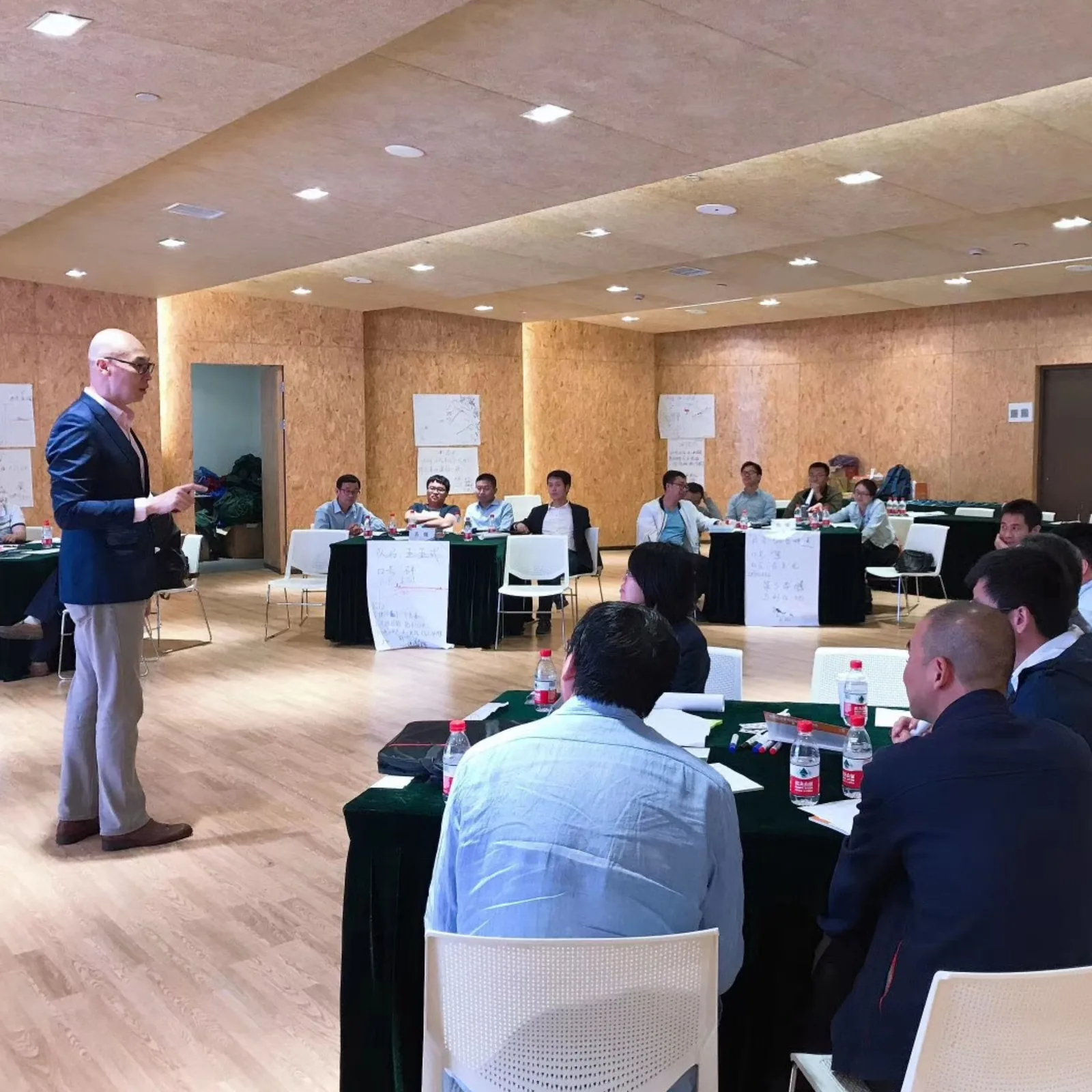
- Business Enneagram Leadership, two days, in Mandarin or bilingual. The GM, the local managers and, where useful, the headquarters sponsor in the same room. Leaders find their own pattern first, then read the people they lead. Run in-house for one company or in our open Kuala Lumpur cohorts.
- Advisor sessions for the GM. Monthly, in Mandarin, with someone who has run a business in China and a group in Malaysia. The agenda is the GM's real situations, not a curriculum.
On funding: if your Malaysian company is registered with HRD Corp and contributes the levy, all of this is claimable under SBL-Khas for your Malaysian employees, and you pay nothing upfront; we prepare the claim pack and claim directly. The GM from headquarters attends the same session; only the Malaysian staff's seats are claimed. Our guide to claiming HRD Corp for leadership training walks through the steps and timing.
Why we are the right people to ask
We have sat on both sides of this table. Simyee Lim spent seventeen years with Mercedes-Benz in Beijing, holding director-level roles in a German company run largely in Chinese, and then served as Group CEO of a Malaysian listed manufacturer, leading a Malay, Chinese and Indian workforce. Daniel Yeo has led teams and run programmes across Malaysia, Singapore, China and Taiwan for more than two decades. Between us we have been the headquarters expatriate, the local CEO and the person in the middle translating, in both languages.
That matters more than it sounds. A Malaysian team will tell a Mandarin-speaking advisor who has run a plant things it will never tell the GM. A Chinese GM will take advice from someone who has reported to a headquarters in Stuttgart from Beijing. Most of our work is turning those two conversations into one.
If you are setting up in Malaysia, or you already have and the second year is harder than the first, the quickest start is a conversation about your team, in whichever language is easier. We will tell you plainly whether this fits.
Frequently asked questions
Do you deliver leadership training in Mandarin in Malaysia?
Yes. FutureX Leader runs the Business Enneagram Leadership programme, team workshops and advisory sessions fully in Mandarin, in English, or in both in the same room. Simyee Lim spent seventeen years in Beijing with Mercedes-Benz and Daniel Yeo has led teams across Malaysia, Singapore, China and Taiwan, so the sessions use mainland business vocabulary rather than translated slides.
Can a Chinese-owned company in Malaysia claim HRD Corp for leadership training?
Usually yes. What matters is the Malaysian entity, not the ownership: an employer registered with HRD Corp that contributes the levy can claim under SBL-Khas for its Malaysian employees. Expatriate managers from headquarters can attend the same session, but their seats are not claimable. We prepare the claim pack and you pay nothing upfront.
What is the most common mistake a Chinese GM makes with a Malaysian team?
Reading silence as agreement. In many Chinese companies a decision announced in a meeting is a decision; in a Malaysian team, the real response often arrives later, privately, or not at all. The second most common mistake is giving corrective feedback in front of others, which costs face and is rarely forgiven.
How long does it take to build a stable local team?
The first ninety days of each key hire decide most of it. If the GM and the local manager know how each other decides, gives feedback and handles pressure in that window, early exits drop sharply. We map that with X-Map before and after the offer, and build the GM's first-quarter plan around it.
Do you work outside Kuala Lumpur, for example Penang, Johor or Kedah?
Yes. We are based in Kuala Lumpur and run programmes on site across Malaysia, including the industrial areas of Penang, Kulim, Johor and the Klang Valley, as well as in Singapore. Sessions can also be run online for a headquarters team in China or Taiwan.